Leonardo's Legacy
The Western order that has long underpinned global prosperity is cracking. Not dramatically. Read more
Abstract In an era of generative AI and ubiquitous digital tools, human memory faces a paradox: the more we offload knowledge to external aids, the less we exercise and develop our own cognitive capacities. This chapter offers the first neuroscience-based explanation for the observed reversal of the Flynn Effect—the recent decline in IQ scores in developed countries—linking this downturn to shifts in educational practices and the rise of cognitive offloading via AI and digital tools. Read more
Picture this: a part-time councillor rushes home from their day job, grabs dinner, then sits down to wade through 600 pages of technical reports two days before a crucial council meeting. Sound familiar? Read more
The government has viewed stronger retail grocery competition as a national priority. But zoning, consenting, and overseas investment approval processes make new entry far too difficult. Read more
This report highlights the economic benefits of investing in general practice, finding significant potential to ease pressure on hospitals and improve patient care. The Heart of Healthcare: Renewing New Zealand's Primary Care System examines the economic case for strengthening GP services, as Health Minister Simeon Brown recently announced initiatives to address GP shortages. Read more
2024 has brought substantial progress in The New Zealand Initiative’s mission to build a more prosperous country. Our evidence-based policy recommendations have influenced reform across multiple sectors. Read more
Nearly twice as many New Zealand school leavers fall into unemployment compared to those who undertake workplace-based learning, according to a new report released today by The New Zealand Initiative. While 11% of 16-19-year-olds are not in employment, education or training, just 6% participate in workplace-based learning. Read more
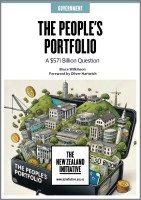
This report shows the government owns $571 billion in assets - equivalent to $275,000 for every Kiwi household. "The returns from these government-owned assets don't even cover the interest costs on the money borrowed to buy them," says Dr Bryce Wilkinson, author of The People's Portfolio: A $571 Billion Question. Read more
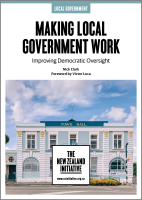
New Zealand’s local government problems stem from a fundamental flaw that can be fixed, research released today reveals. “We have identified the root cause of council dysfunction: mayors and councillors lack the power to deliver what they promise voters. Read more
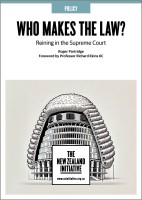
This report warns of a looming constitutional crisis in New Zealand, as the Supreme Court increasingly oversteps its bounds, threatening the balance of power between the courts and Parliament. The report, "Who Makes the Law? Read more
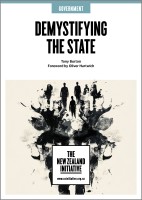
This report challenges common perceptions of New Zealand's state sector and calls for fundamental reforms to improve its performance. The report "Demystifying the State", authored by Dr Tony Burton, provides an in-depth analysis of how the state sector functions, moving beyond idealistic portrayals to examine its real-world limitations and potential for improvement. Read more
A new survey reveals that local councils across New Zealand want more power to make decisions for their communities, rather than having rules set by the central government in Wellington. The New Zealand Initiative, an independent think tank, surveyed New Zealand's mayors, councillors, and council chief executives. Read more
This research report provides a detailed and thoroughly documented examination of the state of academic freedom at our universities, together with an analysis of the main threats to academic freedom in this country at present. “We’ve collected 72 testimonies from academics, analysed 5 surveys of academics and students, and written up detailed reports on 21 incidents involving academic freedom that have occurred over the past decade in this country,” explained Dr James Kierstead, Research Fellow at the Initiative and author of the report. Read more
Canada’s devolution of health services to First Nations provides a strikingly different way of thinking about localism, according to Dr Eric Crampton, Chief Economist with the New Zealand Initiative. “Canada’s central government has long provided, under treaty, a ‘medicine chest’ of funded services to First Nations peoples. Read more
The New Zealand Initiative has released a new research note examining how to implement revenue-sharing between central and local government, a policy the think tank has advocated for since 2013 and which the Government has now committed to pursue. The research note, titled 'Revenue Share' for Housing, explores options for councils to receive a portion of tax revenue from new housing developments, addressing New Zealand's persistent housing shortage. Read more