Submission: Modern Slavery Bill
1. INTRODUCTION 1.1 The New Zealand Initiative (the Initiative) welcomes the opportunity to submit on the Modern Slavery Bill. Read more
Wellington (Wednesday, 27 May 2026) – New Zealand can be a much more prosperous country, and the policy choices needed to get us there are well within reach, says The New Zealand Initiative’s Executive Director, Dr Oliver Hartwich. The Initiative today released Prescription for Prosperity 2026, its fourth briefing to an incoming government. Read more
This is The New Zealand Initiative’s 2026 Prescription for Prosperity. Since 2017, the Initiative has prepared a briefing for the incoming government. Read more
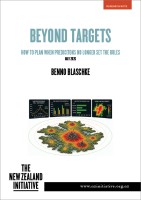
In this episode, Eric talks with Dr Benno Blaschke and Chris Parker about why our current approach to housing supply, which is focused on housing targets and delivered through “predict and provide”, has consistently failed. The explore what a better system could look like by discussing Benno's proposed alternative, where an independent panel would use price-based indicators to evaluate council plans against the conditions of competitive urban land markets. Read more
During the first reading of New Zealand’s Modern Slavery Bill last month, one member of parliament warned it would create perverse incentives to look the other way. Another raised the compliance cost from his experience on an Australian board. Read more
The strongest protection tenants can have is plenty of other potential places to rent, from different landlords eager to rent them a home. When zoning rules make it very difficult to build new housing, existing landlords do not face much potential competition. Read more
Last year, Cabinet papers promised that New Zealand’s agricultural-product regulator would be required to use assessments from trusted overseas regulators. The Bills now before Parliament instead say the regulator must merely “have regard to” them. Read more
By 1974, at the Allensbach Institute she had founded a quarter-century earlier, Elisabeth Noelle-Neumann had given a name to a puzzle first visible in her election research of the 1960s. West Germans would tell her pollsters one thing in private; in public they would say something else, or nothing at all. Read more
Imagine that a public health authority publishes a report on the nation’s diet. After 22 years of data and a 100-page methodology, it announces the four least nutritious food groups. Read more
Housing targets have long been a political football – and an emotional subject. Would it not be better to take some of the heat out of the housing debate and ask more systematically how we could better plan for future housing supply? Read more
It is a truth universally acknowledged that a single politician in possession of good polling must be in want of an election. Similarly, politicians lacking public support are wary of the electoral meatgrinder that awaits them. Read more
An alcohol licensing regime should have one big job: to ensure that licensed outlets operate responsibly, first by vetting applications and then by monitoring compliance. Its measures should be proportionate to the risks being addressed, and cost-effective. Read more
Housing targets have long been a political football. They are also an emotional political subject. Read more
Dr Benno Blaschke talked to Mike Hosking on Newstalk ZB about his research note Beyond Targets, arguing that housing targets alone are insufficient without addressing the planning rules and zoning that create artificial scarcity. Dr Blaschke proposed an independent expert panel, likening it to a financial adviser for cities, to help councils get the urban economics right rather than leaving housing affordability to political decision-making. Read more
Dr Benno Blaschke talked to Jesse Mulligan on RNZ Afternoons about his new report Beyond Targets, which argues that New Zealand's "predict and provide" approach to housing planning locks projections into rigid regulation that fails to respond to real market demand. Dr Blaschke proposes a more flexible system with an independent accountability function, similar to the Reserve Bank's role with interest rates, that monitors price signals and adjusts zoning to ensure housing is provided where people actually want to live. Read more