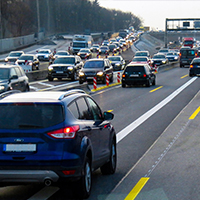
"Authorities could have identified a rising road toll earlier and done more to save lives"
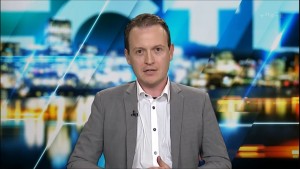
Sam Warburton looked at the data and gives Alison Mau his overview of the situation we are currently in with road deaths. Read more
When mathematician Stanislaw Ulam challenged Paul Samuelson to point to anything in economics that was both universally true and non-obvious, Samuelson pointed to David Ricardo’s principle of comparative advantage: Even the least productive countries still benefit from trade. Richard Thaler’s Nobel Prize is richly deserved for several substantive contributions in behavioural economics. Read more
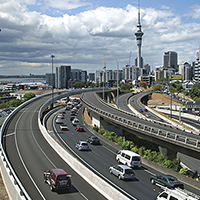
Two weeks ago, and as part of an ongoing series about transport planning, investment and outcomes, I wrote about the road toll. In that period a further 15 car occupants have died, including four people north of Taupō this past Tuesday. Read more
It is Friday, 13 October and I am not writing about the coalition talks. We would have hoped to have a new government by now. Read more
In its 2017 Annual Report, the Board of Directors of the Reserve Bank refers to itself as “a unique governance body in the public sector”. But unique is not necessarily synonymous with good. Read more
Going to sleep at night, in bed with a hot water bottle and a teddy bear, it is comforting to know that somewhere some academic is toiling away, advancing the frontiers of knowledge. Associate Professor Ranjit Voola of the University of Sydney Business School has done this. Read more
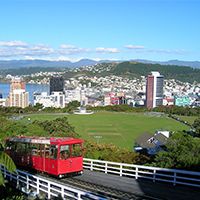
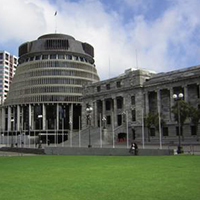
Wellington (12 October 2017): Whatever government forms after coalition negotiations should listen to Wellington City Council’s proposal for a Wellington City Accord, says The New Zealand Initiative. Official Information Act requests today revealed that Wellington City Council has asked the government for expanded powers for the city, whether through a City Accord modelled on Greater Manchester’s City Deal, or through a Special Economic Zone. Read more
Alison Mau interviews Eric Crampton on RadioLIVE about Wellington City Council's request for expanded powers for the city. Whether through a City Accord modelled on Greater Manchester’s City Deal, or through a Special Economic Zone. Read more
What is the difference between automatically enrolling workers in KiwiSaver and putting a housefly sticker in a urinal for men to aim at? Any well-read economist will tell you that both are oft-cited examples inspired by behavioural economics and ‘nudge’ theory. Read more
Foreign investment is an important subject in the coalition discussions, with New Zealand First pushing hard to restrict foreign property sales. Chief Economist Eric Crampton talks with Mike Hosking about the effects on the economy if there will be a major concession done in this area. Read more
On his regular Radio New Zealand Nights chat, Dr Eric Crampton argues that New Zealand is the 'Outside of the Asylum'. As the rest of the world's going increasingly mad, New Zealand is not doing so bad. Read more
Ten people died in fatal crashes on New Zealand's roads this weekend, bringing the road toll to 292 for 2017, up 41 on the same time last year. Sam Warburton talks to The Project about these worrying numbers. Read more
For those of us who think elections should be about policies and not about politics, MMP presents a special kind of purgatory. It is one day short of a fortnight since the election but are we any closer to knowing the result? Read more
We do not know what government will form after party negotiations move past the Phoney War stage. But we do know the problems facing any incoming government. Read more
According to the Economist Intelligence Unit, New Zealand leads the world in ‘educating for the future’. Their latest index, compiled in London, evaluates the extent to which the inputs to education systems prioritise ‘future skills’. Read more