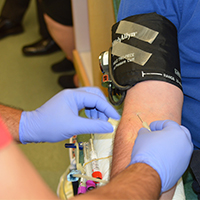
It's time to think seriously about paying blood donors
If you try to make a balloon smaller by squeezing it, you should be careful. It tends not to work well. Read more
Wellington, 16 June 2020 - The Government’s refusal to let its skilled public servants advise a Select Committee about new legislation is “deeply concerning,” said The New Zealand Initiative. Today, the Environment Select Committee published its final report on Minister Shane Jones' Forests (Regulation of Log Traders and Forestry Advisers) Bill. Read more
For the last couple of decades, public debt and banking system liquidity has been ratcheting up around the world after each recession or market correction. But no one appears to have any credible plan for restoring public debt, liquidity or central bank policy rates to normal levels. Read more
Wellington, 12 June 2020 - New Zealand is now on a dangerous path to higher public debt and unprecedented money printing with no credible plan for unwinding the situation before the next crisis, warns a new report by The New Zealand Initiative. Covid-19 and the various types of lockdown responses have caused many governments to go even more heavily into debt and print money to sustain asset prices with borrowed money. Read more
This week, Trade and Export Minister David Parker was exposed to one of the world’s worst ailments: trade protectionism. After nearly two years of negotiations, the EU leaked its agricultural “offer” to New Zealand to European media. Read more
New Zealand is now on a dangerous path to higher public debt and unprecedented money printing with no credible plan for unwinding the situation before the next crisis, warns a new report by The New Zealand Initiative. Covid-19 and the various types of lockdown responses have caused many governments to go even more heavily into debt and print money to sustain asset prices with borrowed money. Read more
A new publication about Jacinda Ardern is hardly remarkable these days. The Prime Minister’s global celebrity status has created a small avalanche of books and magazine covers. Read more
Ten weeks later, the coronavirus has revealed the government’s tightrope of managing the deeper changes happening to New Zealand’s economy. Crises always show the cracks. Read more
A government is not a household and reasoning from wrong assumptions can lead to errors. In the last recourse, households cannot print their own currency. Read more
Making the most of our Covid-free status could open the way for New Zealand to host sports events such as the Six Nations rugby tournament. The Government could let in more athletes, film crews, and university students under a well-managed re-opening of our borders. Read more
An Overseas Experience is almost a rite of passage for Kiwis. Unfortunately, Covid-19 is likely to keep borders mostly shut for another year or two. Read more
With Alert Level 1 approaching, there are few signs the Government has shifted its thinking towards capitalising on New Zealand’s coronavirus-free status. On Wednesday, Minister for Economic Development Phil Twyford fielded yet more criticism, this time for refusing to let an overseas fishing vessel undergo repairs at a Nelson shipyard. Read more
Minister for Climate Change James Shaw this week announced substantial strengthening of New Zealand’s Emissions Trading Scheme (ETS). Total emissions will be capped, and carbon prices allowed to increase to help reduce New Zealand’s overall greenhouse gas emissions. Read more
The Covid-19 crisis has quickly evolved from a health issue into an economic threat. The science was largely clear about what should be done to combat a pandemic, although historians will be the judge of those decisions, but there are plenty of competing ideas now about how to protect the economy after a pandemic. Read more
To understand the mindset of European elites, it is worth going back to the words of the founding godfather or European integration, Jean Monnet: “Europe will be forged in crises and will be the sum of the solutions adopted for those crises." Monnet’s spirit of integration was alive in last week’s proposal to create a €750 billion fund to deal with the fallout of the coronavirus crisis. It is a gutsy move which pushes European fiscal integration to a new level. Read more