
Comparing (export) apples with apples
The Third Law of Demand Once you see it, you see it everywhere. Married couples who’ve left the kids home with a sitter go out to nicer restaurants than childless couples who have the same income. Read more
Sean Plunket talks to economist Eric Crampton from the New Zealand Initiative about the Green Party's proposed cap on rent rises.
Read here
Read more
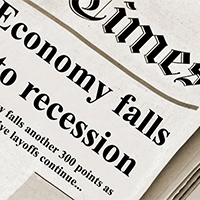
So, we are in a ‘technical recession’. Sounds bad. Read more
The Ministry of Education is being criticised for its new draft of the science curriculum. The proposal doesn't appear to list physics and chemistry, but instead focuses on climate change, biodiversity, the food-energy-water nexus, and infectious diseases. Read more
For most of the 2010s, if schools wanted funding for new classrooms, the Ministry of Education insisted that they build Modern Learning Environments (MLEs). These are large, open-plan classrooms, sometimes housing more than a hundred children and their teachers. Read more
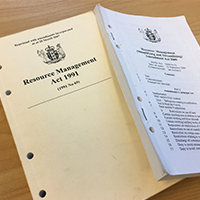
Parliament’s Environment Committee released its reports on the Natural and Built Environment and Spatial Planning Bills this week. The (Labour) majority recommends that modified Bills be enacted. Read more
Victoria University of WELLINGTON has announced a new $30-million research project to figure out how the university managed to dig itself a $30 million financial hole. ‘Some have suggested that spending more than you take in can have that effect over the long run,’ said Associate-Assistant Vice-Dean Barbara Boffin, ‘But it’s obviously something we need to investigate further.’ The losses were definitely not due to a new AI programme designed to find every instance of the university’s name anywhere in the world and capitalize every letter of the word WELLINGTON, said Super-Pro-Vice-Chancellor Tom Toady. Read more
New Zealand has produced some impressive scientists during its short history. Ernest Rutherford, dubbed ‘the father of nuclear physics’, must surely be foremost among them. Read more
Sean Plunket talks to Dr Bryce Wilkinson from the New Zealand Initiative about the 28% rise in public service staff since Labour won in 2017.
Read here Read more
The right to freedom of expression is enshrined in most constitutions and is deemed to be an essential human right under international law. Yet people in many countries face restrictions on their freedom of speech and on other civil liberties. Read more
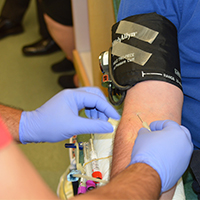
At the start of National Blood Donor Week, the New Zealand Blood Service warned that it will need more donors. According to the Blood Service’s Asuke Burge, “If we can’t meet demand, it means we are going to be forced to compete in the global market, for particularly plasma products. Read more
Over thirteen thousand more full-time equivalent workers joined the public service from 2017 to 2022 – a 28% increase. It contrasts sharply with Australia’s modest increase. Read more
When it comes to pointlessness, the Companies (Directors Duties) Amendment Bill takes some beating. When drawn from the ballot, the Bill proposed amending section 131 of the Companies Act 1993 dealing with the duty of directors to act in the best interests of the company. Read more
Too many minutes are lost every day pondering trivial matters. We think too much about who the next Prime Minister might be, how crime is hurting our businesses or whether our children are being taught the skills they need at school. Read more
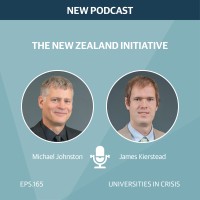
Welcome to the New Zealand Initiative podcast! In this week’s episode, Drs Michael Johnston and James Kierstead discuss the challenges faced by universities in New Zealand, focusing on issues such as declining enrolments, the impact of international student numbers, and the need for universities to foster open and civil debate on controversial topics. Read more