When not even the shovels are shovel-ready
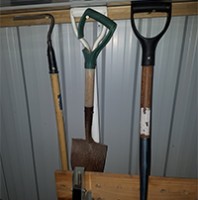
There’s an old short-handled shovel hanging in our garden shed. The plastic handle has split, but the blade and shaft are fine. Read more
Taiwan is one of the few countries to “flatten the curve” while maintaining an open domestic economy. Earlier this week, Taiwan only had 104 active cases of Covid-19. Read more
As the Government looks ahead to the end of the Covid-19 public health emergency it should first look to the past for examples of how good policy intentions in a recovery can go horribly wrong. For instance, a paper by US-based macroeconomists David and Christina Romer shows that fiscal headroom is crucial because it means countries with low-debt will experience much milder downturns after a crisis than highly leveraged countries. Read more
The Government’s wage subsidy scheme has a lot going for it. After a few early wrinkles were ironed out the evidence suggests it has achieved its purpose, helping connect more than a million New Zealand workers with their employer. Read more
Among the more irritating education fads is the idea that schools need to teach a “growth mindset”. It is true that students who think they can improve wind up faring better than those who feel stuck in a hole from which they see no way out. Read more
It was an unusual document Angela Merkel just found in her in-tray. Written in French and on joint letterhead, 15 members of France’s Parliament penned an open letter to the German Chancellor. Read more
New Zealand has come out of lockdown to enter the purgatory of Three-dom (hopefully for only a couple of weeks). The path towards a new normal remains long and littered with challenges. Read more
Even before the Covid-19 crisis, there were gaping inequities in the educational outcomes of students in New Zealand. For example, in its latest (2018) round of PISA testing, the OECD found that New Zealand had the worst socioeconomic gradient (i.e. Read more
This week, the vice chancellor of Victoria University (in Wellington) proved once again he is the bull in the china shop by doubling down on an $150 weekly holding fee for first year student halls. Now, we can all sympathise with universities since they have lost a large portion of their income from international students. Read more
When the facts of the world change, business models must change to keep up. Legislating the world back to the way it was rarely turns out well, and cobbling together regulatory and tax measures to return the media funding environment to the 1980s seems like a mistake. Read more
Last Wednesday, The New Zealand Initiative published a 13-page research report explaining why reliance on central bank credit to fund fiscal deficits is not a free lunch and it is economically dangerous to claim otherwise. The New Zealand Social Credit Association subsequently placed a full-page advertisement in the weekend’s Herald espousing the opposite position. Read more
How do you get an economy going again when entire industries are destroyed? How do you encourage private consumption when families are trying to make ends meet? Read more
South Korea has quickly become a model country for effectively containing Covid-19 without needing a national lockdown. Given that the liberal democracy of South Korea is 40 days ahead of New Zealand on the epidemiological curve, it offers important lessons on how to balance an increase of economic activity with continued efforts towards virus elimination as New Zealand leaves Alert Level 4. Read more
Last week, the diligent Epidemic Response Committee was swarmed by a gaggle of head-honcho media types each making their case for a handout. Plenty of other sectors had their time before the committee, but in hour-long slots before being bumped off by the next sector spokesperson. Read more
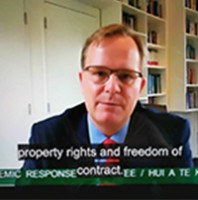
The New Zealand Initiative’s Executive Director Oliver Hartwich presented to the Epidemic Response Committee today, where he outlined his vision for New Zealand’s social, political and economic future. You can watch Oliver’s presentation here (time:1:52). Read more