
Behavioural Economics
There is a natural cycle in intellectual development. New ideas begin as isolated and idiosyncratic attacks from without. Read more
The question I have been asked to address is ‘How big should government be?’. My temptation is to start with the position that they who govern best govern least. Read more
The study of constitutional law often begins with a dispute between two different versions of the relationship of the individual to the state. There are those who think that atomistic individuals come together by a set of voluntary contracts, and those who think that societies should be treated as though they are complex organisms that cannot be understood simply as the sum of their parts. Read more
Limited school choice programmes that give parents a little more choice within a system of largely unchanged, uniform schooling alternatives, should not be used to judge the effectiveness of school choice as a reform catalyst. John Merrifield looks at examples of both real and limited school choice policies from around the world and finds out why some succeed while others fail. Read more
One of the most famous statements about the relationship between a company and a state is contained in a remark by Charles E Wilson ('Engine Charlie' of General Motors) when he was being questioned for his appointment as Secretary of Defence in 1953, the early days of the Eisenhower administration. He said that, "for years I thought what was good for our country was good for General Motors and vice versa". Read more
Opportunity for a lifetime is the fourth and final paper in a series that forms part of the New Zealand Institute’s initial research program on Creating an Ownership Society. This paper follows on from our first three papers, The wealth of a nation, It’s not just about the money, and Home is where the money is. Read more
This lecture, Affirmative Action: The US Experience and Implications for New Zealand, was delivered on 3 August 2004 at the offices of Russell McVeagh, Wellington. Read more
There is a perception in New Zealand that the so-called ‘rich’ do not pay their fair share of tax. Yet the evidence examined by Sinclair Davidson shows this to be untrue. Read more
On my last visit to New Zealand in 1999 I spoke as an outsider to a sceptical audience on how best to interpret the Treaty of Waitangi.1 I said that one of the great challenges facing a country formed by successive waves of immigrants is to put together disparate norms from rival cultures, each of which has its own distinctive legal understandings as to how the world does or should work. On that occasion I said that I would like to start from a neutral corner, and then proceeded to address several Roman law analogues to the question of prescriptive rights, largely on the basis that the great Roman authors were not influenced by the future events that unfolded in New Zealand. Read more
Home is where the money is is the third paper in a series that forms part of the New Zealand Institute’s initial research program on Creating an Ownership Society. This paper follows on from our first two papers, The wealth of a nation, and It’s not just about money. Read more
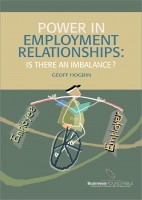
This lecture, Is There Unequal Bargaining Power in the Labour Market?, was delivered in Wellington on 2 August 2004 at the offices of Chapman Tripp Sheffield Young, Wellington. Read more
Like many countries, New Zealand has experienced a significant increase in family breakdown since the 1960s. Patricia Morgan finds that the family in New Zealand is now in a worse state than almost anywhere else. Read more
Nobody would wish to defend corporate irresponsibility or suggest that businesses should behave antisocially. It is little wonder therefore that corporate social responsibility (CSR) is a popular notion. Read more
One problem in any technical field is that some technical terms sound like ordinary language, and people outside the field, familiar with their ordinary meaning, mistakenly assume they understand them. Consider all the people who think they really understand the theory of relativity - except for the details. Read more
In this modern age of global commerce, it seems odd that I have been asked to address the topic 'In defence of the corporation'. Even the most ardent critic of the corporation would not take the position that the corporate form should be dismissed as an ill-conceived venture of modernity so that it would be for the better to be rid of it and return to being a nation of artisans. Read more