
Dr Hartwich's top ten
1. Don’t like capitalism? Read more

Dr Oliver Hartwich
28 October, 2016


1. Don’t like capitalism? Read more

This week the United Nations named Wonder Woman honorary ambassador for the Empowerment of Women and Girls. Apparently she “will be tasked with raising awareness about Goal 5 of the UN Sustainable Development Goals”. Read more


If the mystification around the low local election turnout was not strong enough a signal that officials just do not get local government, the latest freedom camper rules review should amp it up. The government is anticipating a deluge of freedom campers over the summer and at next year’s British and Irish Lions tour. Read more

Science has it that you are more likely to remember the minute details of losing money, losing friends, and receiving criticism than you are about winning money, making friends, and receiving praise. This may explain recent editorial furore and media commentaries recounting all the failures of the Minister of Education, Hekia Parata, following her announcement that she will not be contesting in the 2017 elections. Read more
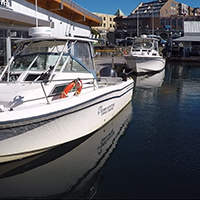
John Steinbeck once said that any man who pits his intelligence against a fish and loses had it coming. While a novice fisher might find this saying humorous, a veteran likely won’t, since much can be said about the challenges of fishing for sport. Read more
If income inequality is not rising in New Zealand, but enough voters think it is, do inequality concerns still matter? This week The New Zealand Initiative released The Inequality Paradox: Why inequality matters even though it has barely changed. Read more

Equipping today’s students with the skills needed for tomorrow’s jobs is perhaps the 21st century’s greatest challenge. But how confident are we that our tertiary education sector can innovate to meet the future needs of students? Read more


The public is constantly told income inequality is rising and the government should do something. A recent NZ Listener article asserted inequality had risen faster “in recent years” than in almost any other developed country. Read more

Later this week the official results of the local body elections will be released, but even before the first vote was cast many were predicting who the biggest loser would be: local democracy. It looks like that prediction is paying off. Read more

In George Orwell’s dystopian novel, Nineteen Eighty-Four, the tyrannical state develops an artificial language called Newspeak to align thought and action with the ideology of the Party. Its aim is to entrench the tyranny of the Party by making other modes of thought impossible. Read more

Thomas Hobbes told us the State is necessary to protect us. The war of all against all that would ensue without a State to protect us from each other would be worse than even a terrible despot. Read more


A motto I live by is to hope for the best but expect the worst. As such, I was disappointed but not surprised to hear immigration minister Michael Woodhouse announce this week that the government is getting tougher on immigration policy. Read more

The future is uncertain but that technology’s role will become more important is as safe a prediction as any. This was the key message in a talk by renowned futurologist Peter Cochrane to the Initiative this week. Read more
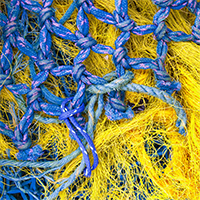
There is a fishing saying, ‘When in doubt, exaggerate.’ At least that is what comes to mind when the fishing industry repeatedly refers to the quota management system (QMS) as world leading. In some respects, the QMS may well have maintained world leading status after 30 years, but certainly not with respect to holding commercial fishers accountable for their catches. Read more

Given the Government has set targets for pretty much everything else – from eradicating stoats to eradicating smokers, a target for reducing child poverty doesn’t seem too much of a stretch, right? John Key received quite a bit of flak this week for refusing to agree to a poverty reduction target, arguing that there are many different ways of measuring poverty, and it is difficult to pick just one. Read more