Submission: Tackling Congestion in Auckland, the Auckland Road Pricing Evaluation Study
We welcome the focus on this issue. The quality of life in Auckland, not to mention New Zealand's prosperity, depends on an efficient transport system. Read more
The New Zealand Institute welcomes the introduction of the KiwiSaver scheme as a step in the right direction. The introduction of a scheme to encourage household savings is a long overdue addition to the New Zealand policy landscape. Read more
The proposal to extend the adult minimum wage to 16 and 17 year olds may be well-intentioned, but it is likely to adversely affect the employment and training of young workers. Read more
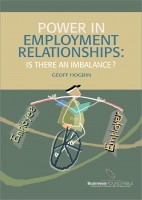
The labour market is like any other market: pay and conditions are largely determined by supply and demand, rather than through a power struggle between employees and employers. Geoff Hogbin exposes the fallacies behind the arguments for labour regulation, and makes the case for a freely functioning labour market as the best protection for employers and employees alike. Read more
This submission is made by the New Zealand Business Roundtable (NZBR), an organisation comprising primarily chief executives of major New Zealand business firms. The purpose of the NZBR is to contribute to the development of sound public policies that reflect overall New Zealand interests. Because of the size of its member companies, few of them have a direct interest in Unlisted. Read more
New Zealand is not on track to lift its average living standards relative to Australia or the OECD average. The BPS is based on a projected annual average rate of growth in real GDP of only 2.8 percent during the five years to March 2010. Read more
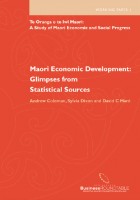
Provisionally entitled Te Oranga o te Iwi Maori: A Study of Maori Economic and Social Progress, the book will look at factors and institutions that have influenced Maori development and ways of building on past achievements. The first Working Paper, Maori Economic Development: Glimpses from Statistical Sources, was undertaken by Wellington-based Motu Economic and Public Policy Research. Read more
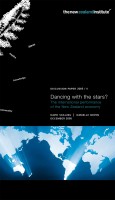
Dancing with the stars? Is the second paper in a series that forms part of the New Zealand research project on ‘Creating a global New Zealand economy’. Read more
I sometimes describe my cultural and economic point of view as being that of a cultural optimist; that is, I expect the future in a commercial economy to bring us more choices and more diverse choices. If we put aside the concerns of the current day and look back at world history, it has been the globalising eras that have brought us cultural diversity. Read more
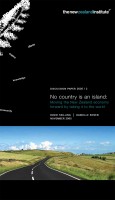
No country is an island is the first paper in a series that forms part of the New Zealand Institute’s research project on ‘Creating a global New Zealand economy’. Read more
Against the human experience of long-term stagnation and misery, the record of growing prosperity over the past two centuries and, in particular, the last 50 years, is astounding. Economic growth owes much to the mobilisation of resources and structural flexibility, but this depends on the 'software of economic development' - institutions, which change slowly. Read more
'The rule of law' is at once one of the most persistent and mysterious phrases in jurisprudence. I am not aware of anyone who is opposed to the rule of law. Read more
I have been assigned a fiendishly large topic. How do you deal with so vast a subject? Read more
The NZBR agrees with the statements in the introductory note to the Bill about the importance of security in private property rights and the need for compensation when rights in private property are taken. Many of our submissions on government regulations over the years have stressed the need for governments to take a more circumspect and principled approach to altering private property rights. Read more
The concept of fairness is both elusive on the one hand and well-nigh indispensable on the other. On particular occasions, I devoutly wish that the word would be eliminated from the English lexicon, which is a bit like hoping to hold back the tides with a wave of the hand. Read more