

Report author Roger Partridge will also discuss his report on a webinar with Fran O'Sullivan and Fraser Whineray on 2 March at 2:30 pm. You can register for that webinar here.
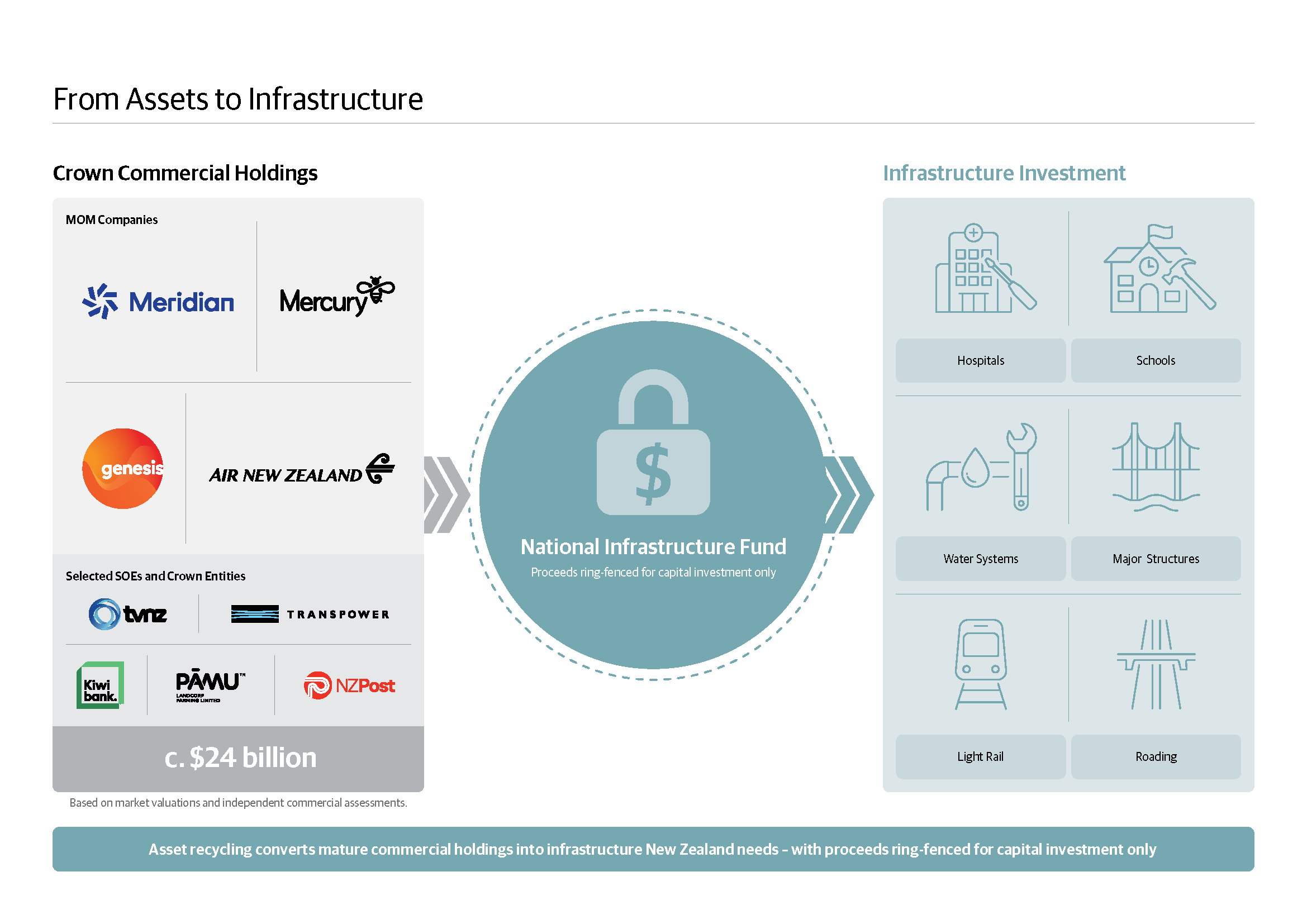
New Zealand could unlock more than $24 billion for essential infrastructure by recycling mature Crown-owned commercial assets, according to a new report by The New Zealand Initiative.
Renovating the Nation: How Asset Recycling Can Help Solve the Infrastructure Deficit, by the Initiative chair Roger Partridge, argues the government should redirect capital tied up in commercial enterprises into hospitals, schools, roads and water systems — without raising taxes or increasing public debt.
"New Zealand is asset-rich but infrastructure-poor," Partridge said. "The Crown's balance sheet totals $598 billion, yet roads are congested, water systems are failing, and schools and hospitals face mounting maintenance backlogs. Asset recycling converts commercial holdings the Crown doesn't need to own into the infrastructure the country desperately needs."
The report identifies mixed ownership model electricity companies, Air New Zealand, Kiwibank, New Zealand Post and TVNZ as candidates for recycling — all operating in markets already well-served by private competitors or under regulatory frameworks that protect consumers regardless of ownership.
Rather than selling assets to fund day-to-day spending, the report proposes a disciplined model based on the successful New South Wales approach. Between 2012 and 2024, NSW raised more than A$50 billion by selling or leasing mature commercial assets and ring-fencing proceeds in a dedicated infrastructure fund, delivering the Sydney Metro, WestConnex motorways and regional hospitals. Research found 61 per cent of NSW residents supported the approach once they could see the infrastructure being delivered.
The report proposes establishing a National Infrastructure Fund through primary legislation, with proceeds statutorily ring-fenced, projects independently prioritised by the Infrastructure Commission, and transparent public reporting on funds raised and outcomes delivered.
Partridge said the report offered a practical path forward. "Tax increases face strong political resistance and additional borrowing would worsen an already concerning fiscal position. Asset recycling offers a third way — replacing assets the government doesn't need to own with infrastructure the country urgently needs."
The report recommends a phased approach beginning with commercially mature assets before moving to regulated infrastructure, with transactions sequenced over several years to optimise proceeds and maintain market confidence.
Click here to read a Frequently Asked Questions document of Renovating the Nation: How Asset Recycling Can Help Solve the Infrastructure Deficit.
Roger Partridge discusses his report with our Executive Director Dr Oliver Hartwich on our latest podcast episode. Listen below.
Roger Partridge discussed his report with Fran O'Sullivan, Fraser Whineray and Dr Oliver Hartwich on our webinar launch of the report. Watch below.