

Dr Oliver Hartwich says Only solution is for Greece to leave Eurozone on ABC Radio
Only solution is for Greece to leave Eurozone, says New Zealand Initiative's Dr Oliver Hartwich. Read more
Oliver is the Executive Director of The New Zealand Initiative. Before joining the Initiative, he was a Research Fellow at the Centre for Independent Studies in Sydney, the Chief Economist at the Policy Exchange in London, and an advisor in the UK House of Lords.
Oliver holds a master's degree in economics and business administration and a PhD in Law from Bochum University in Germany.
Oliver is available to comment on all of the Initiative’s research areas.
Phone: +64 4 499 0790
Only solution is for Greece to leave Eurozone, says New Zealand Initiative's Dr Oliver Hartwich. Read more
Ending the Swiss franc’s peg to the euro surprised market participants, analysts and commentators alike, including this writer. Unlike the introduction of the euro peg in 2011, which was flagged beforehand, the end of the measure was prepared in secret. Read more
Usually, we call things stable when they do not change and unstable if they do. Apparently this is not the case in monetary policy. Read more
Estimates have the economy growing above the trend rate compared to other developed nations, but other measures show the benefits of growth aren’t filtering through to all. Patrick O’Meara looks at whether New Zealand's household really are better off. Read more
In my last column of 2014, I wrote that European leaders usually pick the least appealing policy option and still manage to make it worse (A Greek olive branch for Steve Keen, 18 December). Maybe that was a premature assessment. Read more
In a series of articles earlier this year, we introduced Insights readers to some basic ideas from the wonderful world of economics. Today, we are releasing the compilation of pieces in a short pamphlet, The ABC of Economic Literacy. Read more
Only until a couple of years ago, it would have been unthinkable to suggest that New Zealand could hold some policy lessons for Australia, let alone that it could be seen as a model that Australia might wish to emulate. Australians had become used to regarding New Zealanders as their poorer cousins. Read more
Do today’s politicians have the courage to make hard choices? Or has the furious pace of modern politics put an end to the age of reform? Read more
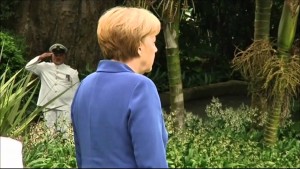
Dr Oliver Hartwich speaks on German Chancellor Angela Merkel's visit to New Zealand. Read more
Dutch graphic design student Zilla van den Born recently made international headlines with her Bachelor’s thesis on ‘Fakebooking’. For those of us familiar with Facebook but not with Fakebooking, her project was all about falsifying her own life and posting about it on the social network. Read more
There can be little doubt that New Zealand house prices, particularly in Auckland, have reached eye-watering heights. This week it was reported that capital valuations in Auckland have risen 33 percent over the past three years. Read more
Two countries, two successful internet entrepreneurs, two clashes with government. Last week we witnessed an epic Twitter battle between Trade Me founder Sam Morgan and Economic Development Minister Steven Joyce over the usefulness of research grants. Read more
This week, the New Zealand Herald ran a couple of stories about the young generation being shut out of the housing market. The newspaper even had a snappy name for these poor Gen Y’ers who are resigned to the fact that they will never own a home: “property orphans”. Read more
The elections in the state of Saxony a couple of weeks ago mark a historic shift in Germany’s political landscape. The liberal, business-friendly Free Democrat Party got kicked out of parliament, having lost two thirds of their previous voters and being left with only 3.8 percent of the vote. Read more
New Zealand has to wait another three weeks for the result of its elections, in another MMP country they went to the polls last Sunday. In the German state of Saxony, voters delivered a fractured parliament in which none of the traditional coalitions of the right or the left had a clear and robust majority. Read more