Universities must be neutral
Academic freedom is a hot topic at the moment. The coalition agreement required universities to have academic freedom policies to receive government funding. Read more
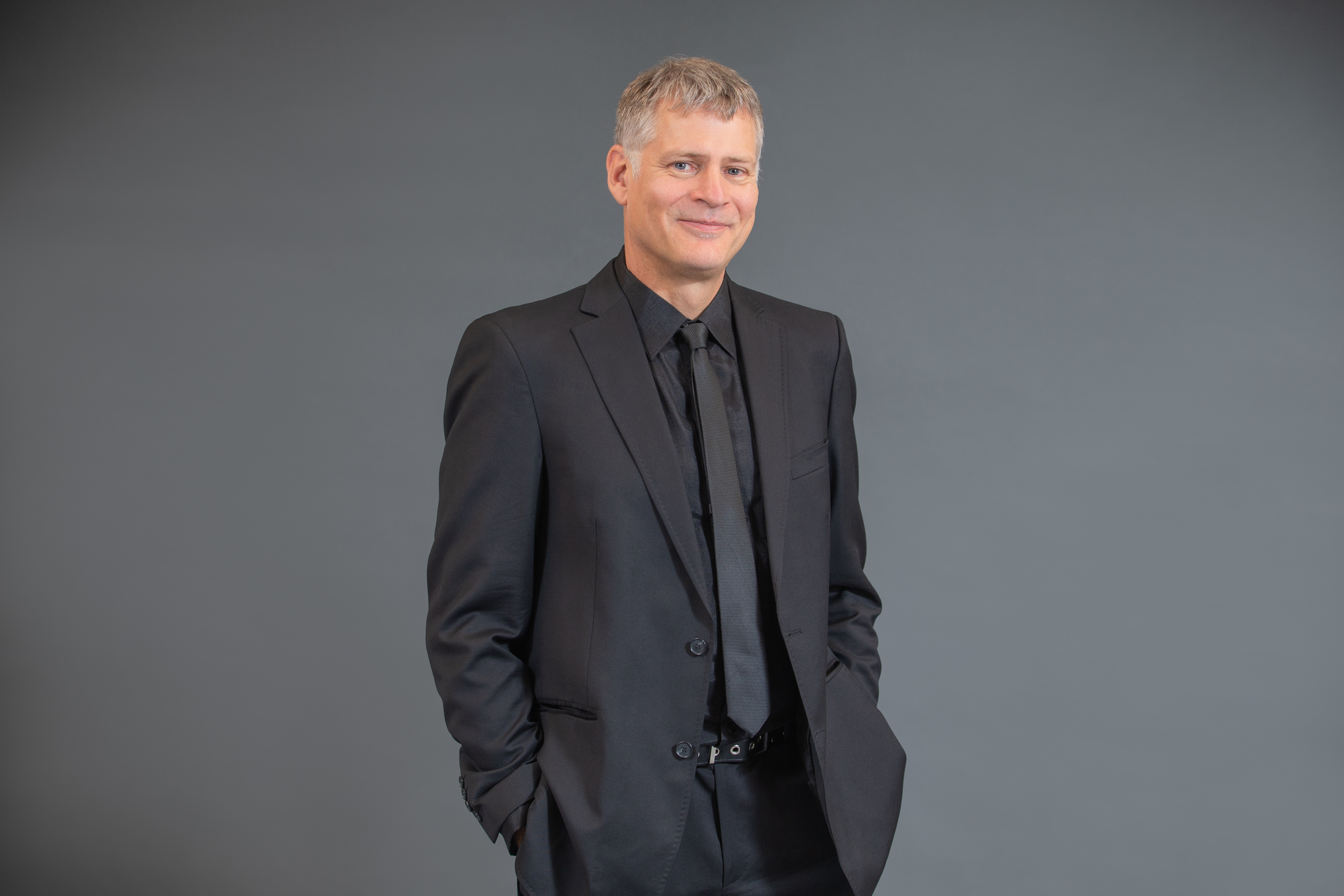
Michael is a Senior Fellow at The New Zealand Initiative. He leads the Initiative’s work on education. He is a cognitive psychologist with a background in literacy research, educational assessment and psychometrics.
Prior to his time at the Initiative, he was the Associate Dean (Academic) of the Faculty of Education at Victoria University of Wellington. Between 2005 and 2011, he worked at the New Zealand Qualifications Authority (NZQA), where he developed a new, more reliable, marking system for NCEA examinations. In 2024, Michael chaired a Ministerial Advisory Group (MAG) for Education Minister Erica Stanford. The MAG advised on the development of a knowledge-rich curriculum for English and mathematics. Following that work, Michael is currently a member of the Curriculum Coherence group, which advises on the development of knowledge-rich curricula across all school subjects. Michael is also a member of a technical advisory group to NZQA on assessment for NCEA and New Zealand Scholarship.
In his time at The New Zealand Initiative, Michael has published reports on Modern Learning Environments, systems reform in education, teacher education, the use of AI in education, and pathways for industry training and apprenticeships.
Phone: 044990790
Academic freedom is a hot topic at the moment. The coalition agreement required universities to have academic freedom policies to receive government funding. Read more
To solve a problem, first you have to understand it. Once you understand it, you sometimes realise that it isn’t the same problem you had thought. Read more
In this episode, Michael talks to Travis Brown, a filmmaker who explores how different ideologies can lead to polarisation and dogmatic thinking, drawing from his own experiences in both fundamentalist Christian and leftist circles. The two discuss how growing political division threatens democracy and examine Brown's doco "When in Doubt," which demonstrates how embracing doubt and curiosity can lead to better understanding between people with opposing views, even if they don't ultimately change their minds. Read more
Dr Michael Johnston talks to Sean Plunket on The Platform about Massey University allegedly circulating a banner for staff emails featuring the "2020" logo, which is associated with opposition to David Seymour's Treaty Principles bill. Dr Johnston argues this violates the principle of institutional neutrality and reveals how a university staff member anonymously reported this to the Free Speech Union, though they are still awaiting official confirmation from the university's vice-chancellor. Read more
The Trends in Mathematics and Science Study (TIMSS) runs every four years. It measures Year 5 and Year 9 students in different countries on what they have learned in science and mathematics. Read more
You might think that a national organisation awarding research grants would fund the best proposals. You might even think that funding decisions would be made by experts who can identify quality when they see it. Read more
John Gerritsen on RNZ questions whether to keep NCEA Level 1, following an Education Review Office report that calls it unreliable and unclear in purpose. Dr Michael Johnston talks to RNZ saying the entire NCEA system needs review, particularly to create better pathways for students pursuing trades and apprenticeships rather than university. Read more
In this episode, Eric and Michael discuss Australia's proposed law to ban social media for under-16s, examining how age verification would likely require government ID and create serious privacy risks as platforms would need to store this sensitive data. While acknowledging concerns about social media's impact on young people, they argue the Australian approach could enable government surveillance, compromise online anonymity, and create technical challenges that would either be easily circumvented or impose heavy costs on legitimate users. Read more
Every Wednesday, New Zealand Initiative staff meet to discuss our columns for the week. It is part of our routine. Read more
Dr Michael Johnston spoke to Simon O'Connor on Reality Check Radio about the significant challenges facing New Zealand's education system, including curriculum issues, teacher training problems, and declining university standards. He outlined potential solutions including a more structured knowledge-rich curriculum for schools, improved teacher training methods, and addressing free speech concerns in universities, while emphasising the need for both regulatory and cultural changes to improve educational outcomes. Read more
In this episode, Michael and James talk to Oxford theologian Nigel Biggar as he discusses his experiences with academic cancel culture and argues that while the British Empire had significant flaws, it also helped spread important liberal values and institutions throughout the world. The conversation then delves into how modern universities are struggling with free speech and academic discourse, suggesting that a combination of institutional cowardice, loss of religious frameworks, and generational disconnection from historical threats to democracy has led to current campus tensions around controversial topics. Read more
Every year in New Zealand, around 62,000 young people leave school. Just 6% of them enter apprenticeship training. Read more
In this episode, Michael talks to Stephanie Martin about the concerning state of academic freedom policies being developed by New Zealand universities. They examine how several universities' draft policies might actually restrict rather than protect academic freedom, with particular attention to the University of Auckland's Senate recently rejecting their proposed policy, whilst highlighting the need for better legislative guidance and cultural change to protect open discourse in academia. Read more
While studying psychology, my fellow students and I replicated a famous study conducted by B.F. Skinner in the 1940s. Read more
Only a few days after the University of Auckland’s so-called academic freedom policy was rejected by the university’s Senate, Victoria University of Wellington’s own academic freedom policy has come to light. Victoria’s policy is likely a response to the government’s stated intention to make such policies a condition for government funding. Read more