Efficient policing
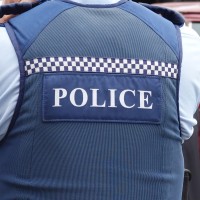
Old fashioned crimes, like car theft and burglary, have certain characteristics that can be annoying for the police. For one thing, laws have to be passed to define them. Read more
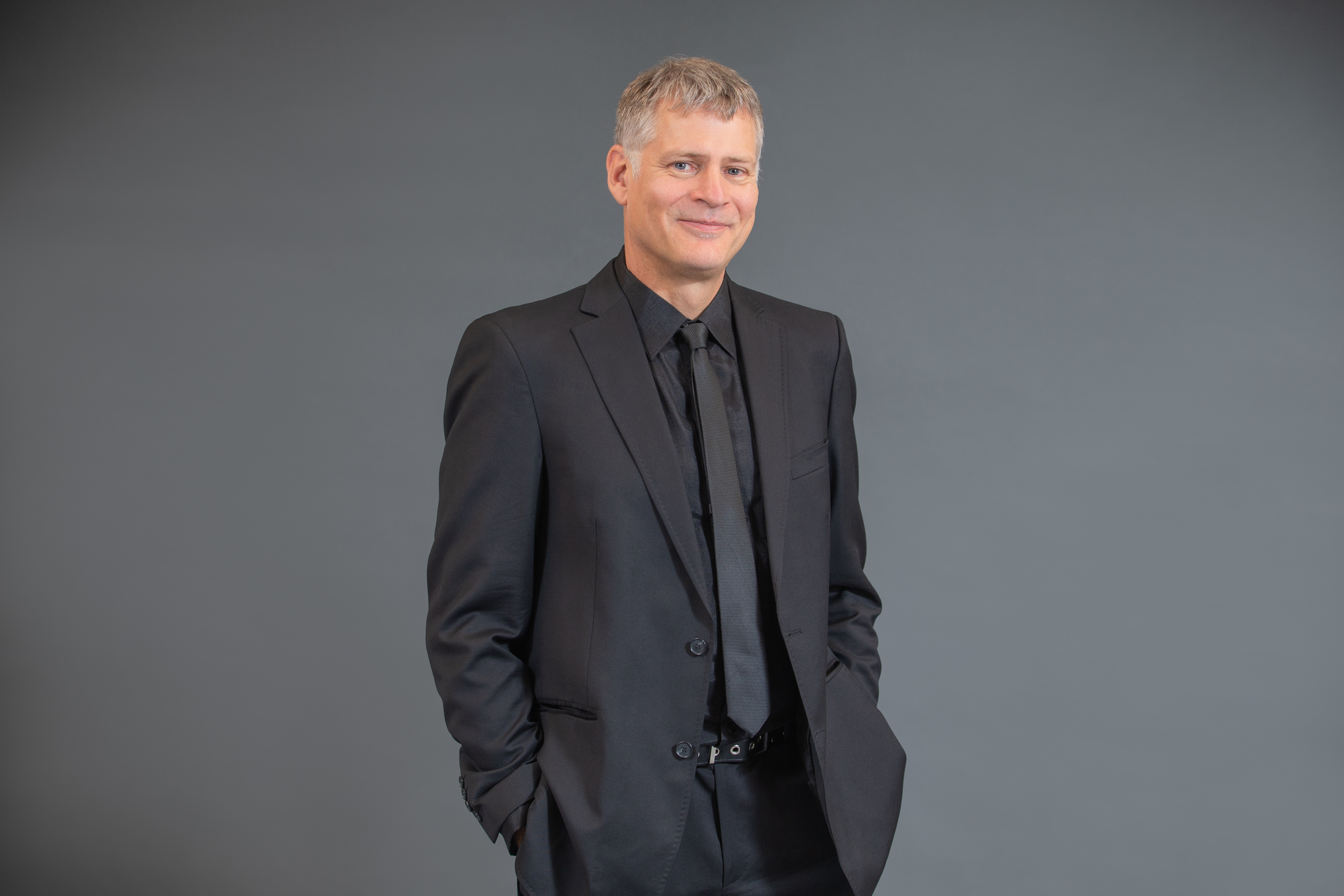
Michael is a Senior Fellow at The New Zealand Initiative. He leads the Initiative’s work on education. He is a cognitive psychologist with a background in literacy research, educational assessment and psychometrics.
Prior to his time at the Initiative, he was the Associate Dean (Academic) of the Faculty of Education at Victoria University of Wellington. Between 2005 and 2011, he worked at the New Zealand Qualifications Authority (NZQA), where he developed a new, more reliable, marking system for NCEA examinations. In 2024, Michael chaired a Ministerial Advisory Group (MAG) for Education Minister Erica Stanford. The MAG advised on the development of a knowledge-rich curriculum for English and mathematics. Following that work, Michael is currently a member of the Curriculum Coherence group, which advises on the development of knowledge-rich curricula across all school subjects. Michael is also a member of a technical advisory group to NZQA on assessment for NCEA and New Zealand Scholarship.
In his time at The New Zealand Initiative, Michael has published reports on Modern Learning Environments, systems reform in education, teacher education, the use of AI in education, and pathways for industry training and apprenticeships.
Phone: 044990790
Old fashioned crimes, like car theft and burglary, have certain characteristics that can be annoying for the police. For one thing, laws have to be passed to define them. Read more
As an education academic, I taught the quantitative component of a research methods paper for the Master of Education programme. Most of the students undertaking that qualification were mid-career teachers. Read more
Prime Minister Luxon declared at last weekend’s National Party conference that the country faces an educational crisis. New data from the Curriculum Insights and Progress Study (CIPS) show that 78% of Year 8 students – nearly four out of every five – are behind curriculum expectations in maths. Read more
Erica Stanford has had a lot on her plate in her first year as a Minister. In her education portfolio, she has set a cracking pace, with work well underway on a knowledge-rich curriculum for primary and secondary schooling. Read more
This episode features Michael, with Oliver, responding to and critiquing statements made by Prof Peter O'Connor on RNZ about education policy. Michael systematically disagrees with O'Connor's views on the government's proposed education reforms, arguing that O'Connor misrepresents the reforms and presents false dichotomies between knowledge acquisition and creativity in education To listen to our latest podcasts, please subscribe to The New Zealand Initiative podcast on iTunes, Spotify or The Podcast App. Read more
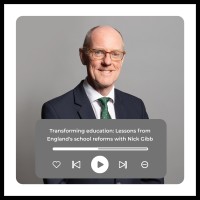
In this episode, Michael talks to Nick Gibb, former UK Minister for Schools, about education reforms implemented in England over the past decade. The conversation covers various aspects of these reforms, including the introduction of systematic synthetic phonics for reading instruction, changes to the mathematics curriculum, teacher training improvements, and the challenges faced in implementing evidence-based approaches in education. Read more
Health New Zealand has been quite economical lately. I don’t mean ‘economical’ in the fiscal sense, of course. Read more
In this episode, Oliver and Michael discuss recent education reform recommendations in NZ, focusing on the development of a knowledge-rich curriculum and evidence-based teaching practices. Michael, who chaired the Ministerial Advisory Group that made these recommendations, defends the proposed changes against various criticisms and emphasizes that they are based on scientific research about effective learning, not political ideology. Read more
In this episode, Michael and James talk to Toby Young, founder of the Free Speech Union in the United Kingdom, the associate editor of The Spectator, and a former editor of Quillette. The discussion spans a wide range of topics including the challenges to free speech in academia, the evolution of charter schools in the UK, and the broader implications for liberal democracy, offering insights into the complex interplay between free expression, education policy, and political shifts in contemporary society. Read more
In the opening months of 2024, I had the honour of chairing a Ministerial Advisory Group (MAG) for Education Minister Erica Stanford. Our remit included both the curriculum, which specifies what students should be taught, and the common practice model, which specifies methods of teaching. Read more
Dr Michael Johnston discusses his new report Welcome to the Machine: Opportunities and risks of generative AI for education with Prof Barbara Oakley. Dr Oliver Hartwich moderates this discussion. Read more
New technology typically inspires both utopian dreams and dystopian fears. AI is a salient example of this optimism-pessimism dichotomy. Read more
In the 2024 budget, substantial funding was announced to move teacher education towards an in-school, apprenticeship-style model. The injection of funding is intended to address the shortage of teachers currently facing our schools. Read more
This podcast episode is from our recent AI in education webinar where Michael presents his report on generative AI in education, emphasising its potential as a supportive tool while cautioning against replacing traditional learning methods. Prof Barbara Oakley joins as a special guest to provide expert commentary on the cognitive science aspects. Read more
It is about 18 months since the release of Chat-GPT, the first widely available ‘large-language’ artificial intelligence (AI) chatbot. Even in that time, the capabilities of AI have massively improved. Read more