

Brexit: Keep calm and carry on
It is midday New Zealand time, and in Britain they have just started counting the votes of their referendum on EU membership. Polling day surveys show a narrow lead for the Remain camp. Read more
Oliver is the Executive Director of The New Zealand Initiative. Before joining the Initiative, he was a Research Fellow at the Centre for Independent Studies in Sydney, the Chief Economist at the Policy Exchange in London, and an advisor in the UK House of Lords.
Oliver holds a master's degree in economics and business administration and a PhD in Law from Bochum University in Germany.
Oliver is available to comment on all of the Initiative’s research areas.
Phone: +64 4 499 0790
It is midday New Zealand time, and in Britain they have just started counting the votes of their referendum on EU membership. Polling day surveys show a narrow lead for the Remain camp. Read more
Our Executive Director, Dr Oliver Hartwich, talks to Radio New Zealand about maths in schools, and our recent research which found that one in three New Zealand primary school teachers could not add simple fractions. Read more
Groucho Marx did not want to belong to any club that accepted people like him as members. Next Thursday, the British will have to decide if they feel the same way about the European Union. Read more
Our Executive Director, Dr Oliver Hartwich, talks to ABC Radio about the possibility of the UK voting to leave the European Union, following news that German government bond yields have turned into negative territory. Investors are now paying the German government to hold their money, fearing that the UK will opt for Brexit. Read more
Perhaps the defining global economic issue of this decade has been inequality. The notion that a free market economy promotes inequality is having an impact on the political climate. Read more
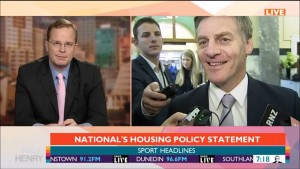
Our Executive Director, Dr Oliver Hartwich, joins Paul Henry to discuss the Government's announced Housing Policy Statement. Read more
Auckland’s housing crisis produces some strange side effects. One of them is that the word ‘boarding school’ might acquire a new meaning. Read more
If there is one art Prime Minister John Key’s New Zealand government has mastered, it is expectation management. So for its eighth budget, delivered yesterday, expectations were low. Read more
It is a journalistic sin to come up with headlines such as “Small earthquake in Chile, not many dead”. With that in mind, you have to pity journalists trying to write about yesterday’s budget. Read more
In 1965, South Korea and Kenya had more in common than they have today. In summary, both countries were poor. Read more
Stereotypes are long-lasting. Think of Africa and images of poverty, hunger and violence come to mind. Read more
History offers great value in learning. But sometimes its lessons are too difficult to understand and apply – even for those who have written the history books. Read more
Nothing is worse than politicians running out of ideas. Or to say it in the famous words of Abraham Maslow, “I suppose it is tempting, if the only tool you have is a hammer, to treat everything as if it were a nail.” In the case of politicians, the hammer is the power to tax and the nails are all the problems that are coming their way. Read more
In his book The Ascent of Money, Harvard economic historian Niall Ferguson introduced us to what he called “the perennial truths of financial history”. They were: “Sooner or later every bubble bursts. Read more