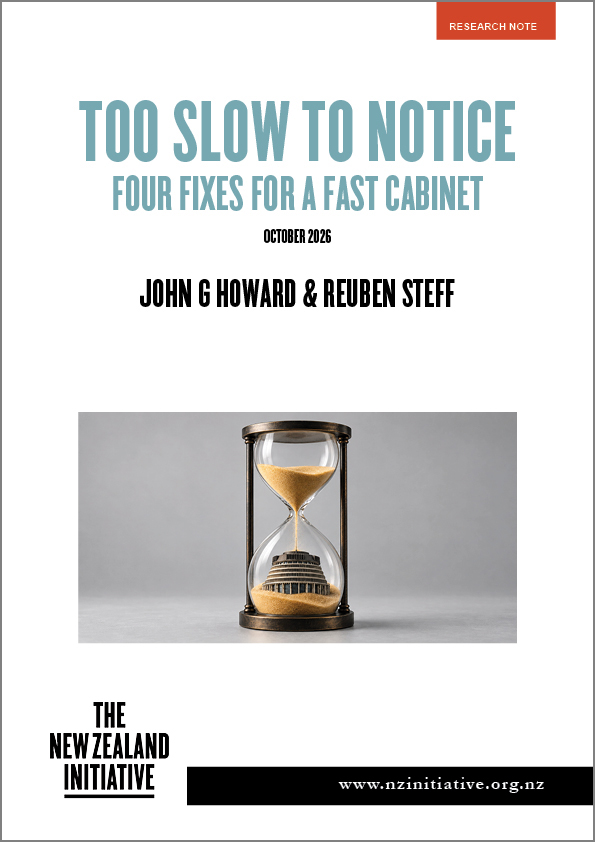


New Zealand has more information about emerging security threats than ever before, but Cabinet is still too slow to turn warnings into action, a research note released today by The New Zealand Initiative finds.
Major General (Ret) John Howard MNZM and Dr Reuben Steff say the problem is speed, not information.
A generation ago, only spy agencies had detailed satellite photos. Today private companies sell photos of almost all the world’s land, taken nearly every day, and anyone can track ships and planes online.
With the right skills and tools, one person can piece together in an afternoon a picture that once required classified sources.
But Cabinet works on a weekly cycle, with papers due the Thursday before meetings, and its national security committee meets even less often.
“We are running an industrial-age Cabinet that never fully entered the information age. The problem is not what we know. It is how we decide,” said Major General Howard.
In 2022, a leaked draft deal that raised the prospect of a Chinese military presence in Solomon Islands was debated in the news for nearly four weeks before China announced it had been signed.
The same pattern appeared closer to home. In May 2024, New Zealand asked for the text of the Cook Islands’ planned deal with China. The deal was signed nine months later without New Zealand having seen it. It was nearly four months before New Zealand responded, pausing some of its funding to the Cook Islands.
This research note proposes four changes within a year:
- a dedicated National Security Adviser and a Director of National Intelligence who both report to the Prime Minister
- a standing rapid-response process to bring ministers together within hours
- pre-approved responses ministers can make quickly
- clear standards for using open-source information and AI.
“The gap between what is knowable and what Cabinet can act on should be measured in days and sometimes hours, not weeks,” said Major General Howard.